24/7

The exhibition

The Handbag Factory, London

15 – 26 October 2026

A group exhibition of new and recent work by Seungjo Jeong, Mizuki Tanahara and Ania Tomaszewska-Nelson. Its title comes from Jonathan Crary’s book 24/7: Late Capitalism and the End of Sleep.

The paintings
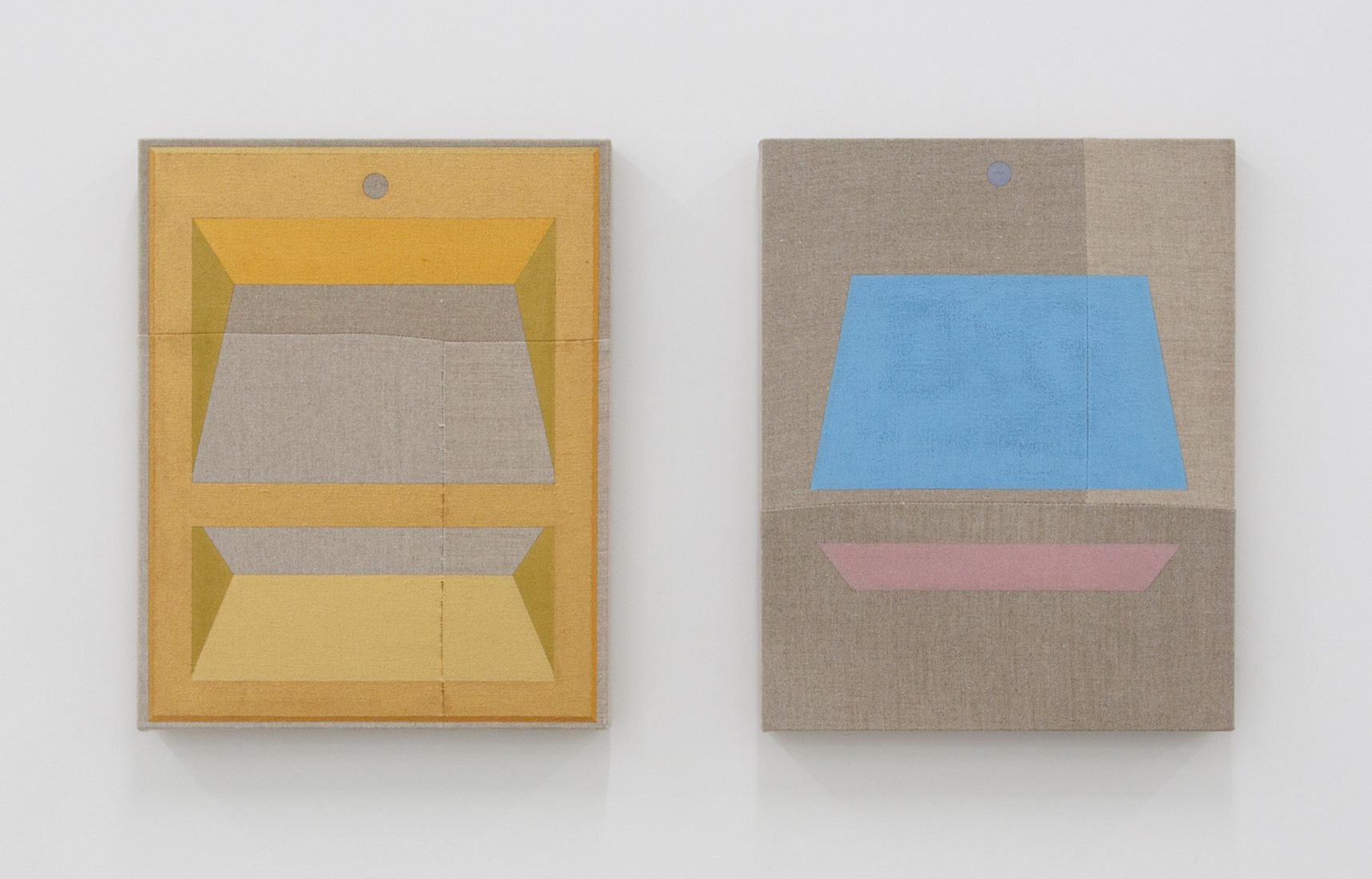
Two small canvases side by side: at left, an ochre-yellow panel with two trapezoids stepping inward, the upper one of bare linen and the lower one pale yellow, and a small grey dot near the top; at right, bare linen with a blue trapezoid above a pink band and a small grey dot near the top. Seams cross both canvases.
Mirage, 2026
50 × 40 cm each, 2 parts · acrylic on linen
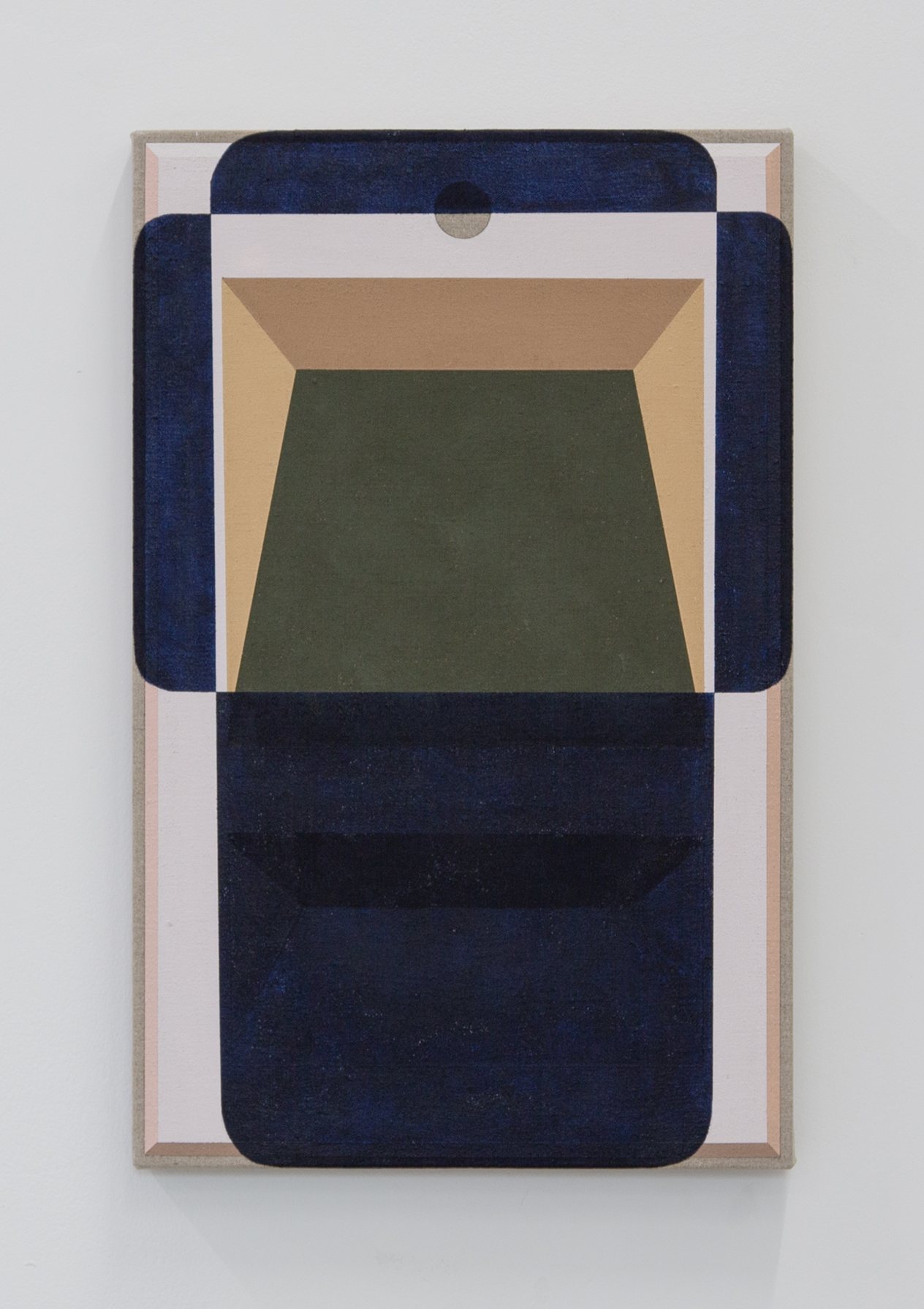
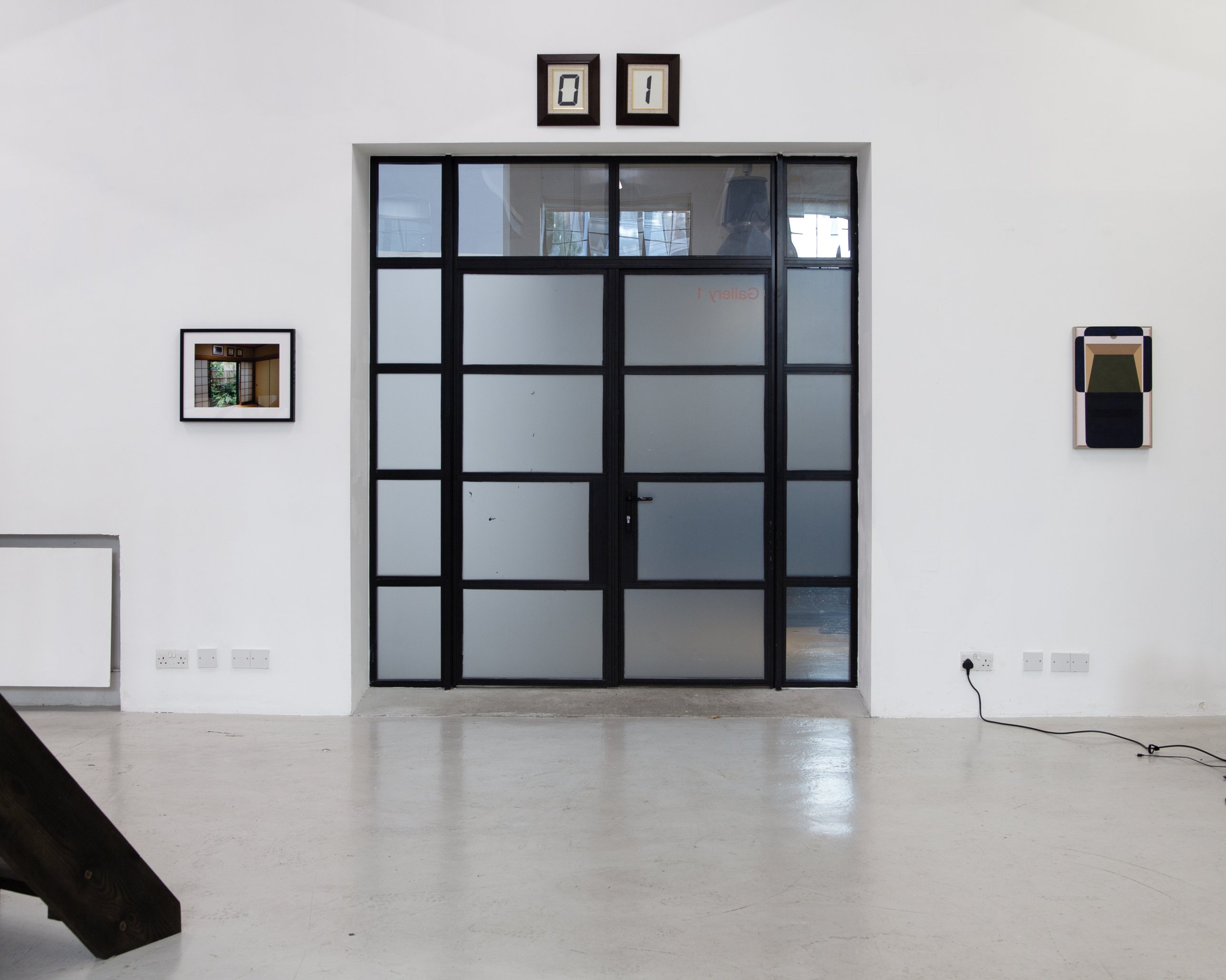
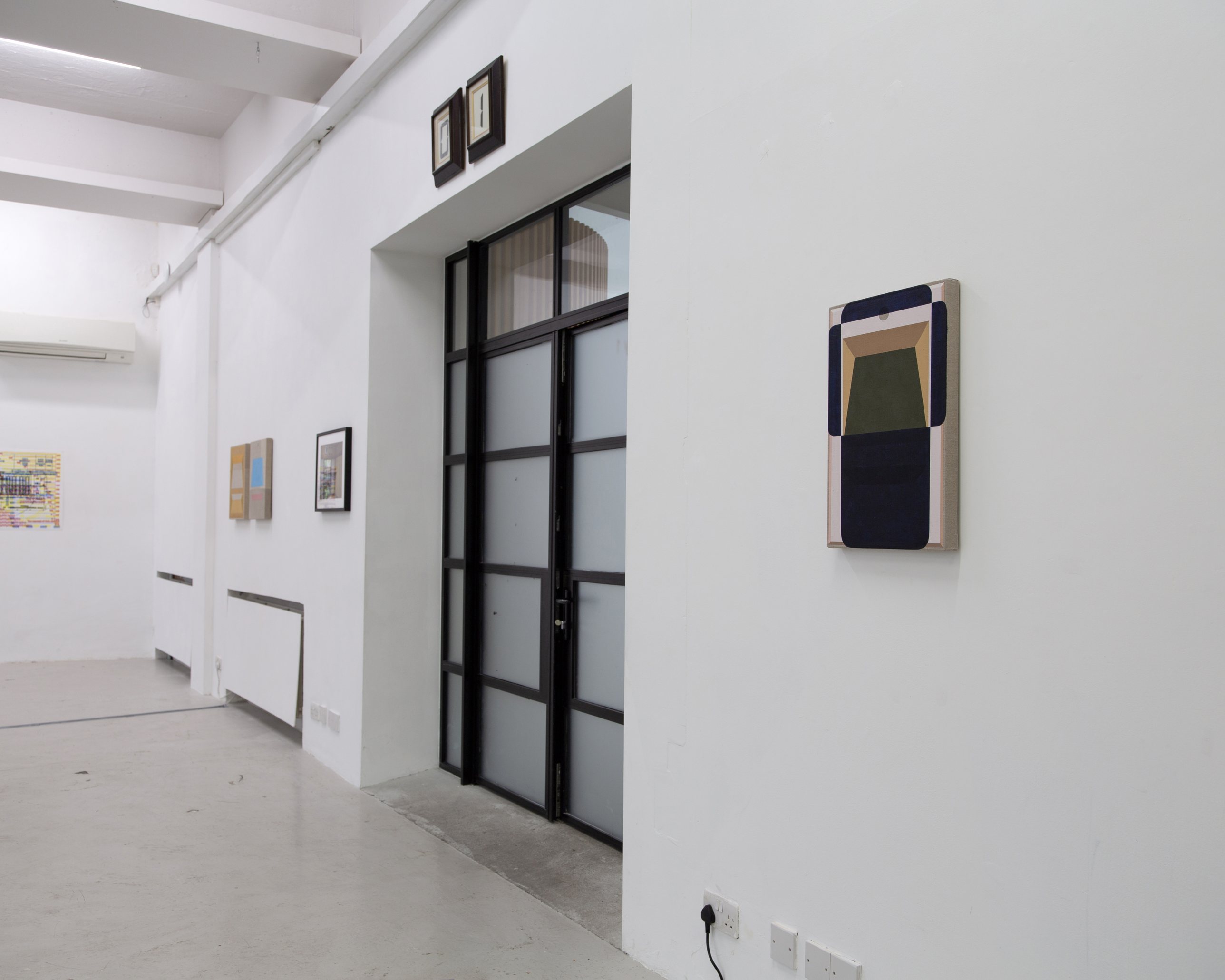
A small upright canvas with a pale pink border and a bevelled edge. At its centre, a recess drawn in perspective, its sides sand-coloured and its back olive green, framed by dark navy shapes with rounded corners above, at either side and below; a small grey circle near the top, and a darker band across the lower navy shape.
Interval, 2026
55 × 35 cm · acrylic on linen
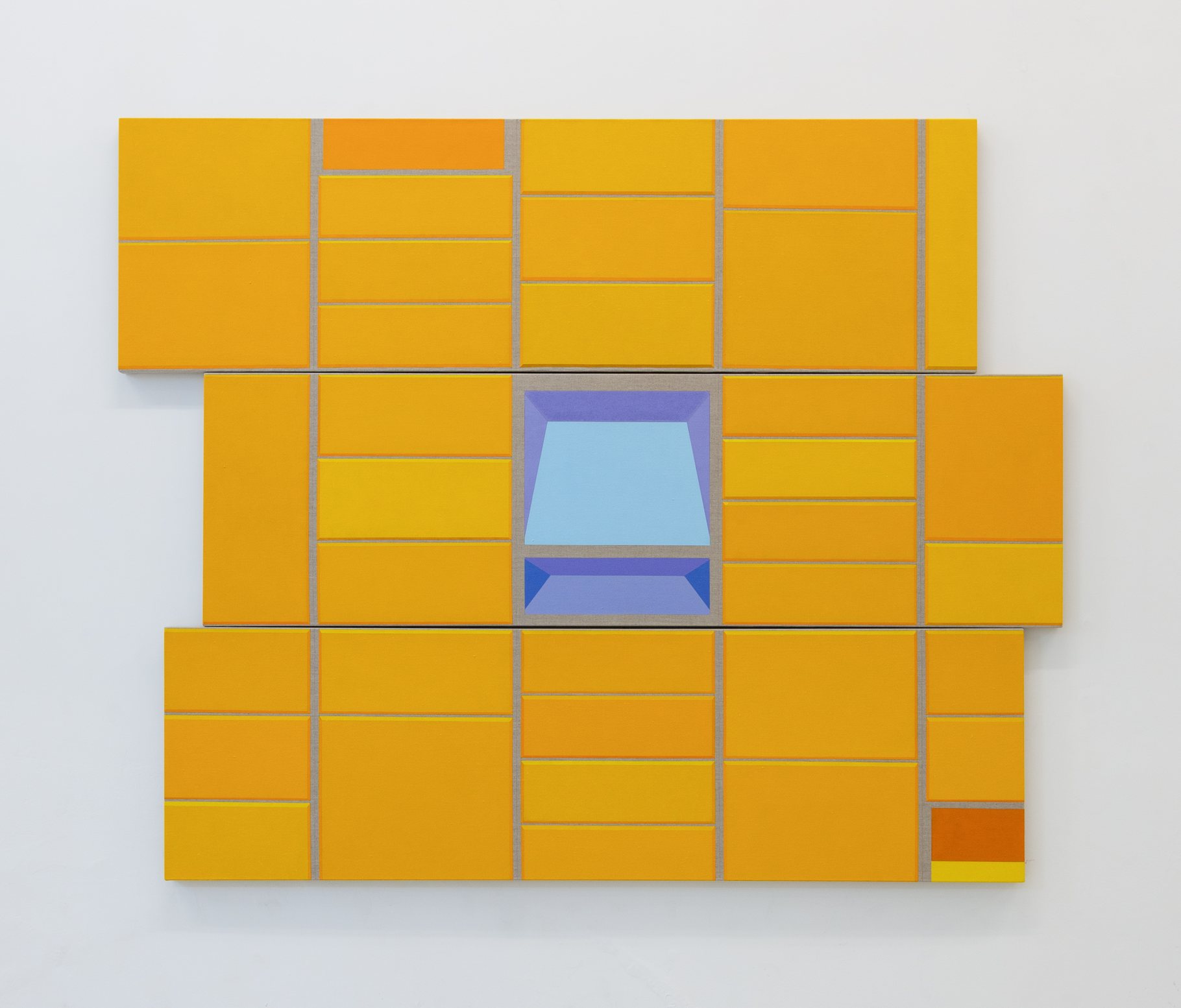
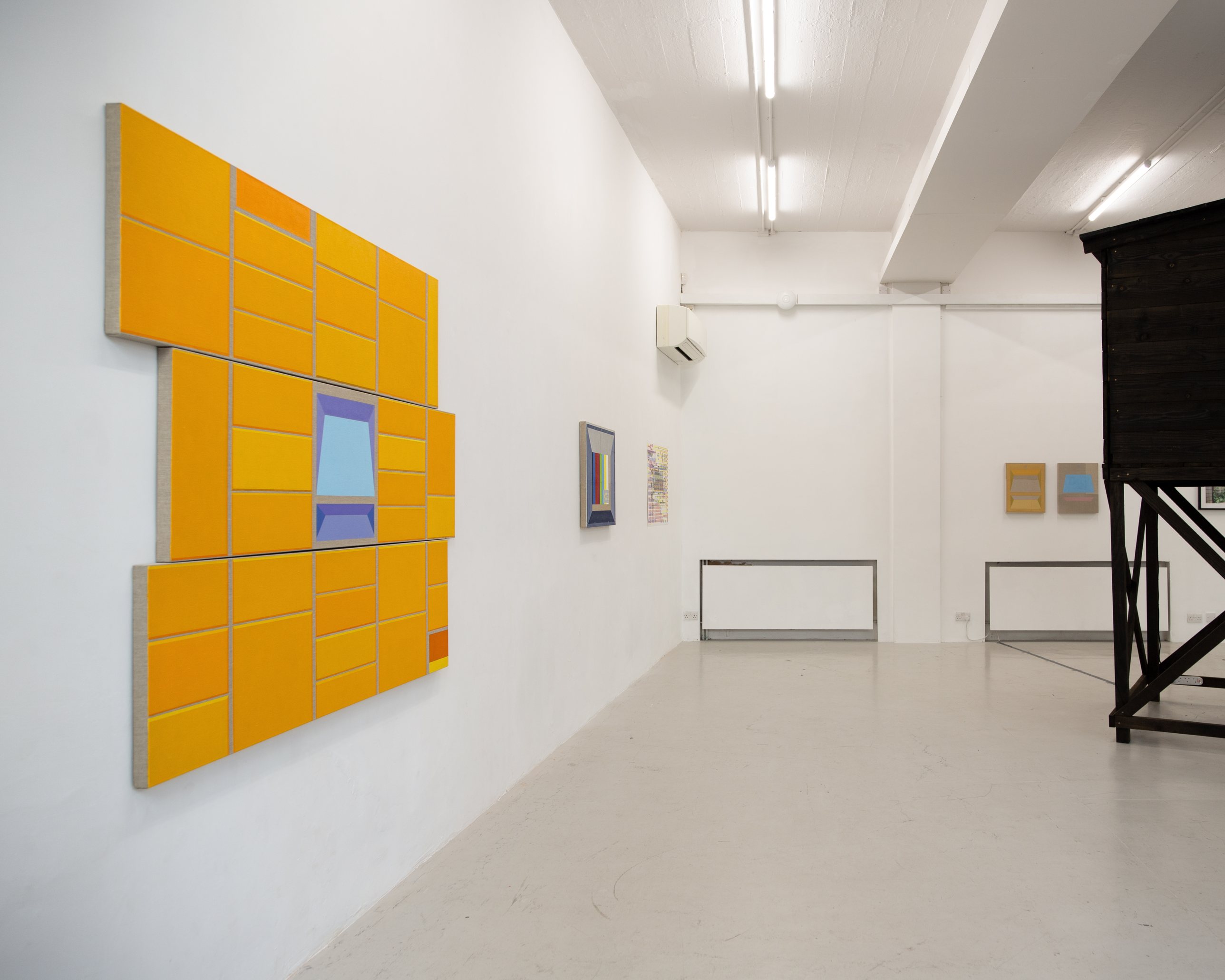
Three long canvases stacked one above another, each set a little to the left or right of the next, and divided by strips of bare linen into rows of yellow and orange doors, like a bank of parcel lockers. In the middle canvas, a pale blue screen in a violet bevelled frame; at the lower right of the bottom canvas, a red-orange door above a yellow strip.
Addison, 2024
50 × 170 cm each, 150 × 186 cm overall, 3 parts · acrylic on linen
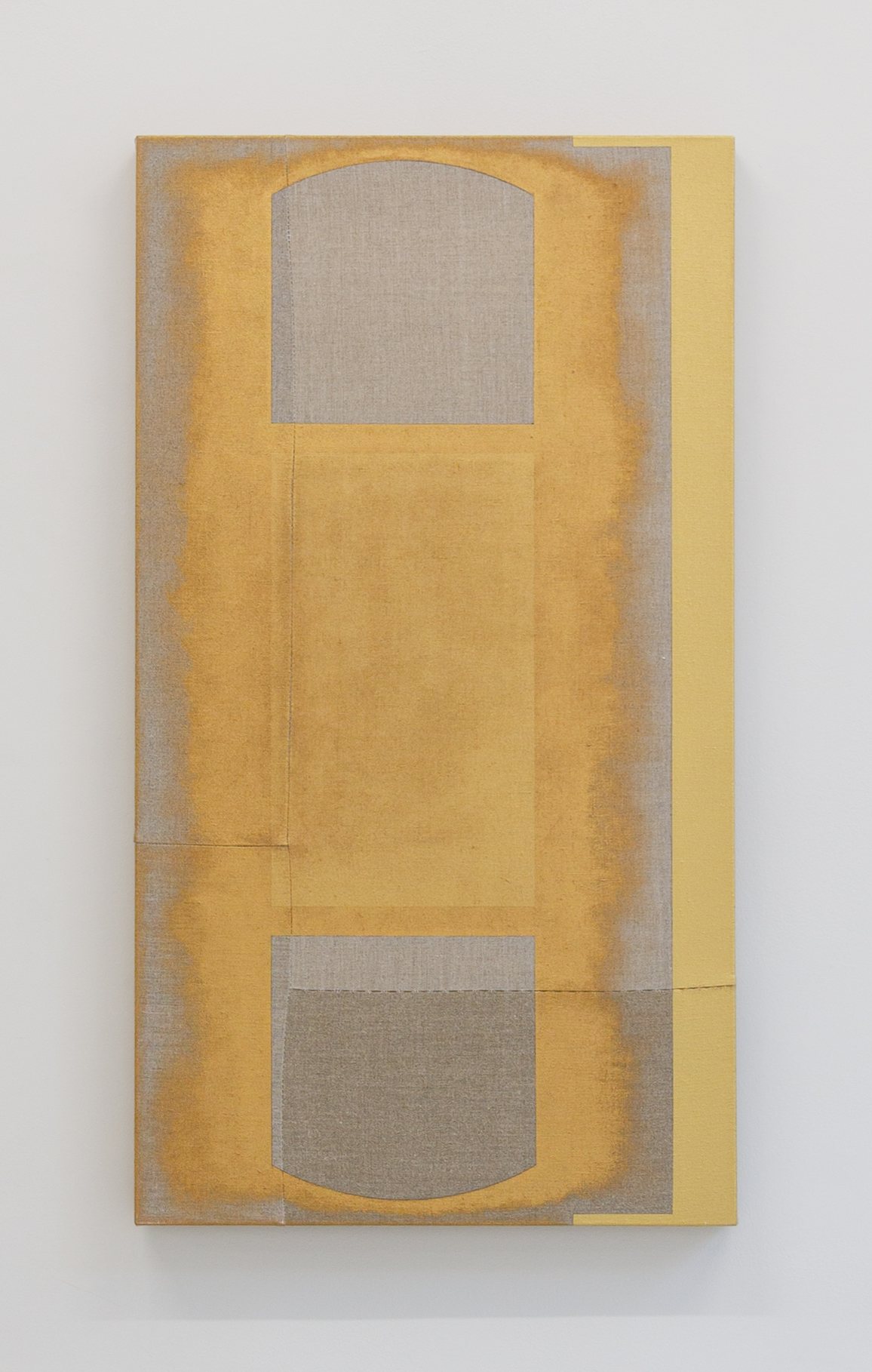
A tall canvas painted ochre-gold, fading into bare linen towards its edges, with two windows of bare linen near the top and bottom, rounded at their outer ends, a paler rectangle between them and a band of pale yellow down the right side, like the face of a videotape. Seams cross the canvas.
Playing Time, 2024
100 × 55 cm · acrylic on linen
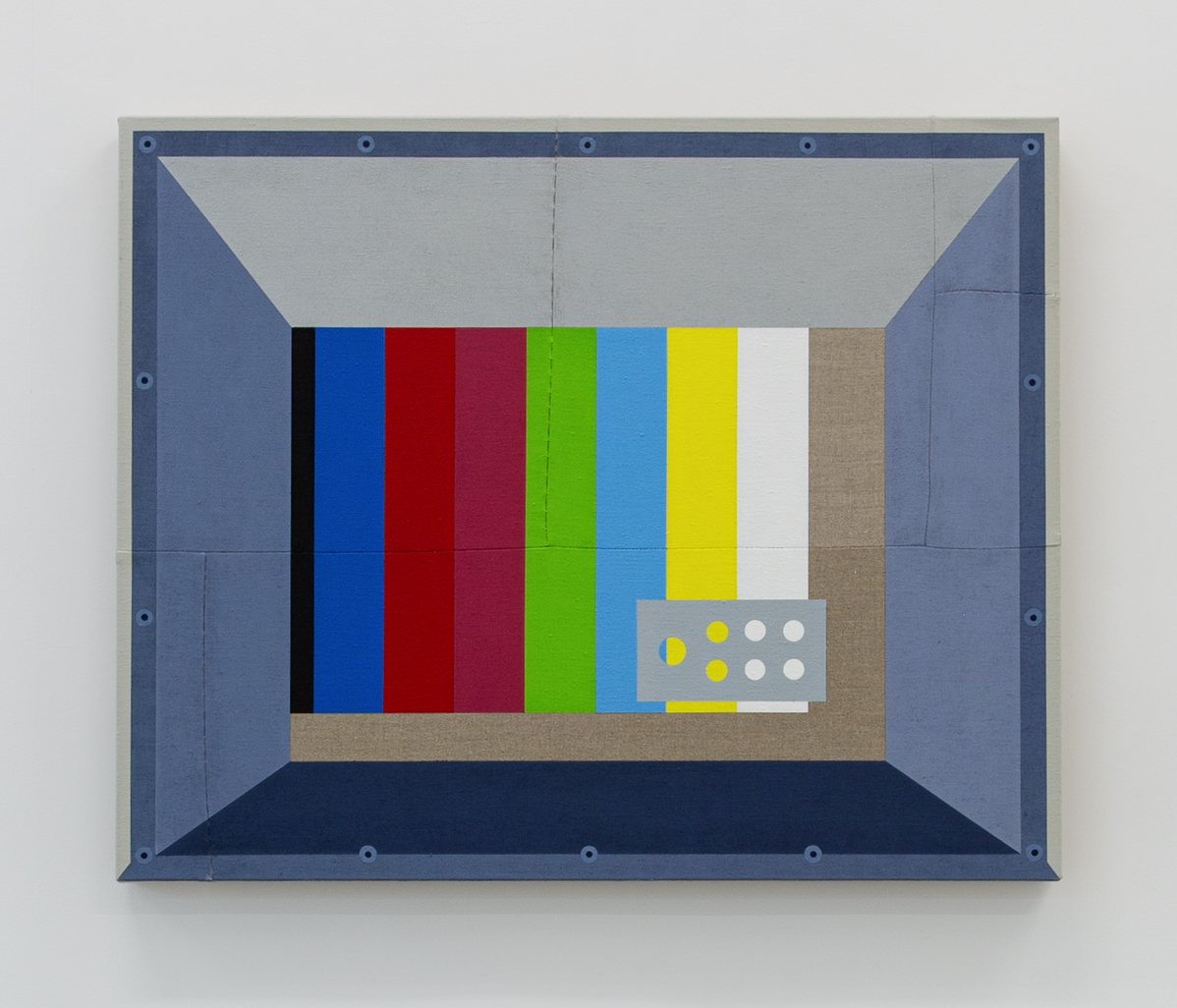
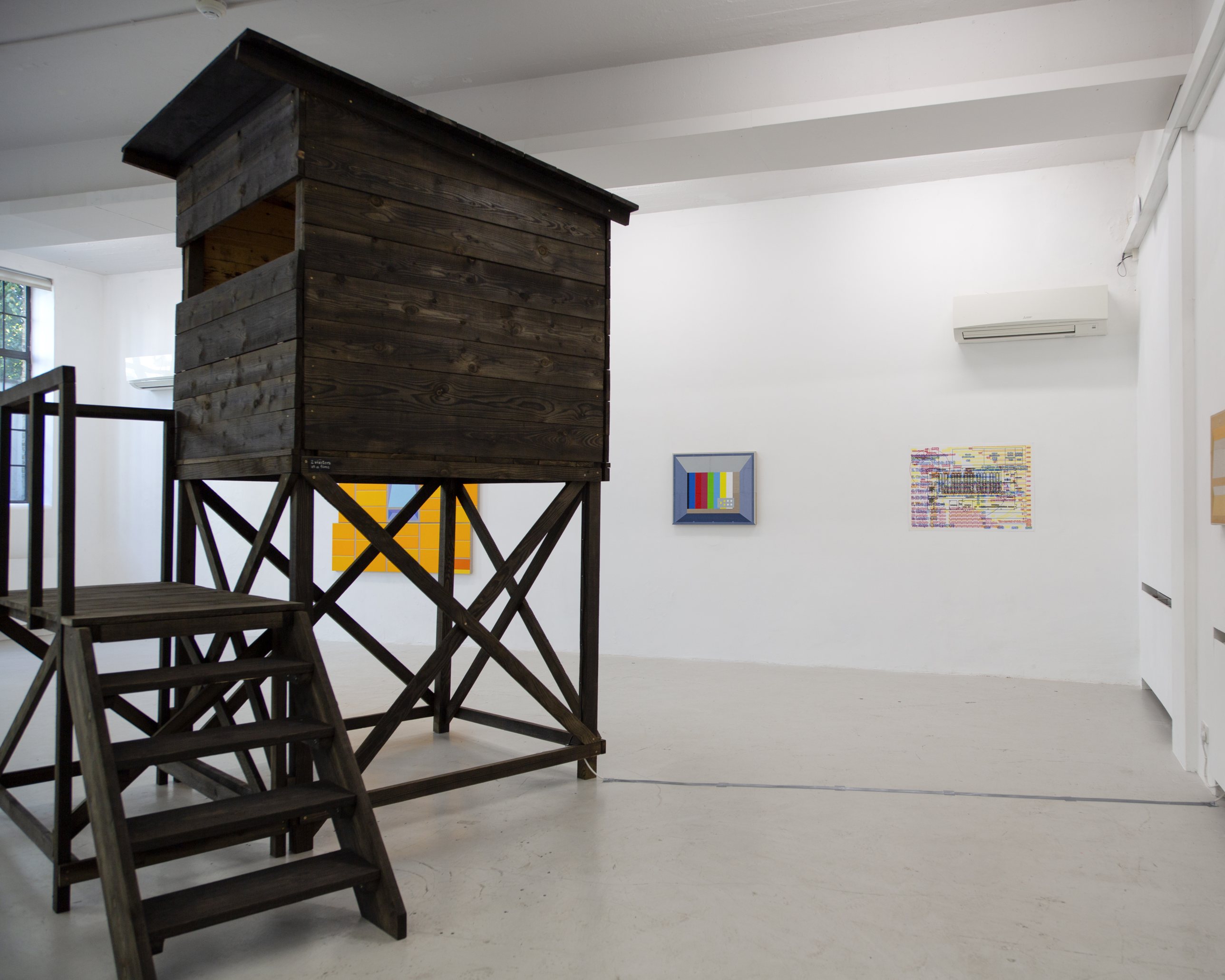
A television screen of colour bars inside a bevelled border, drawn like a box seen head-on: the top face pale grey, the sides blue-grey, the bottom navy, with small dots around the outer edge. Eight vertical bars, black, blue, red, crimson, green, light blue, yellow and white, stand against bare linen, with linen showing below and to their right, and a small grey plate with yellow and white dots sits at lower right. Seams cross the canvas.
Closedown, 2023
65 × 80 cm · acrylic on linen

Installation views
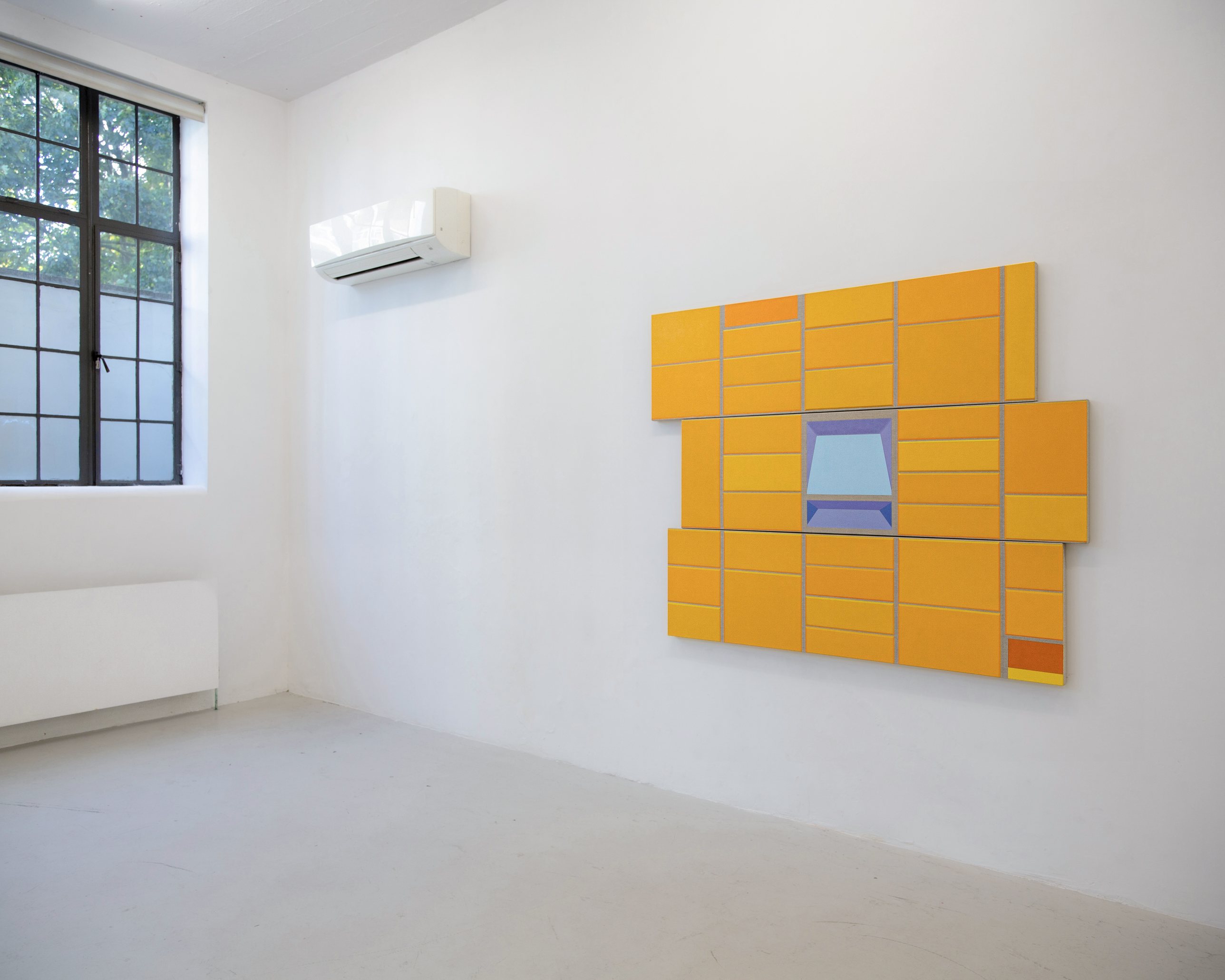
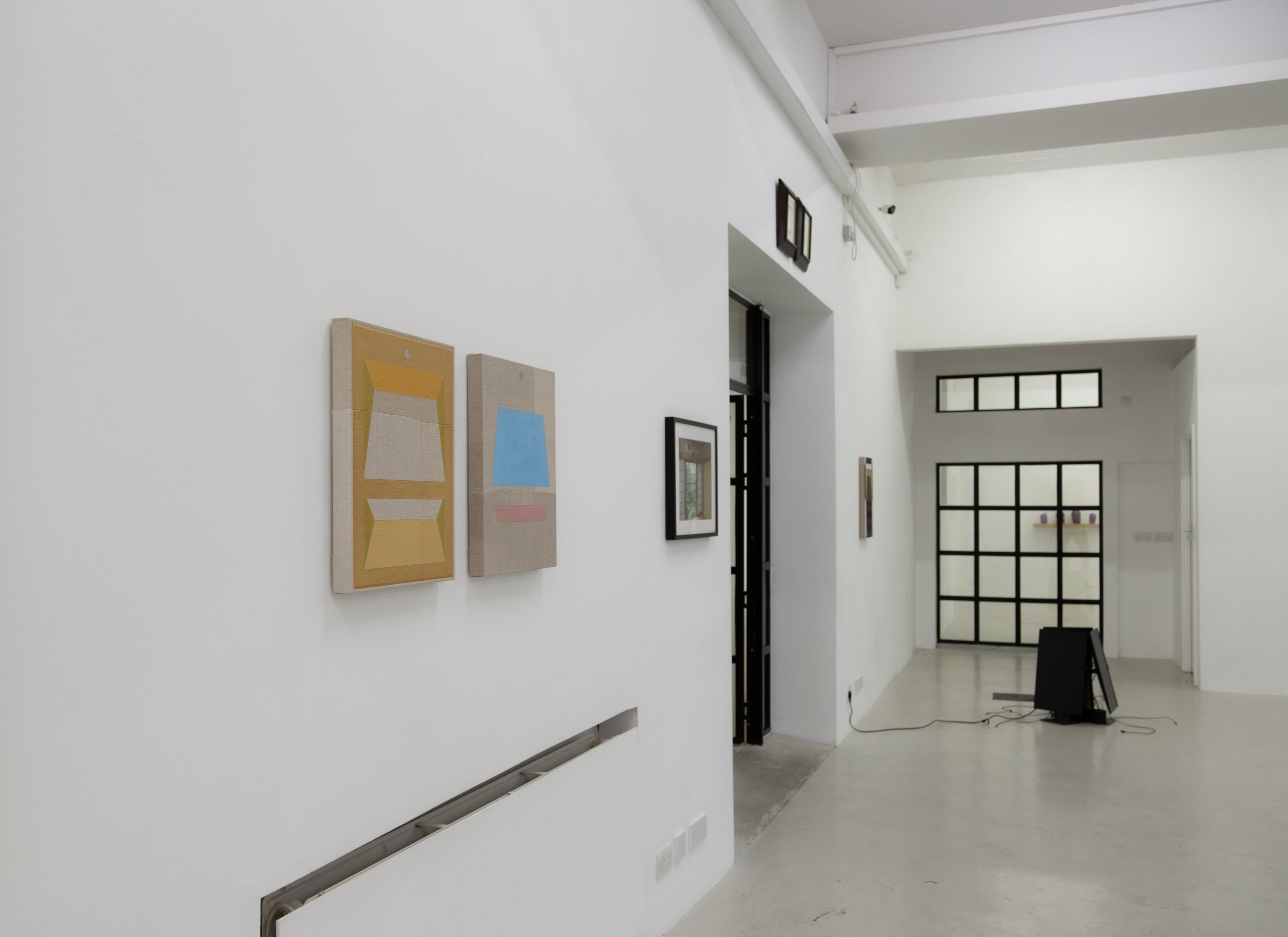
Addison on the long wall, with an air-conditioning unit high up to its left; a steel-framed window and a radiator on the adjoining wall at left.
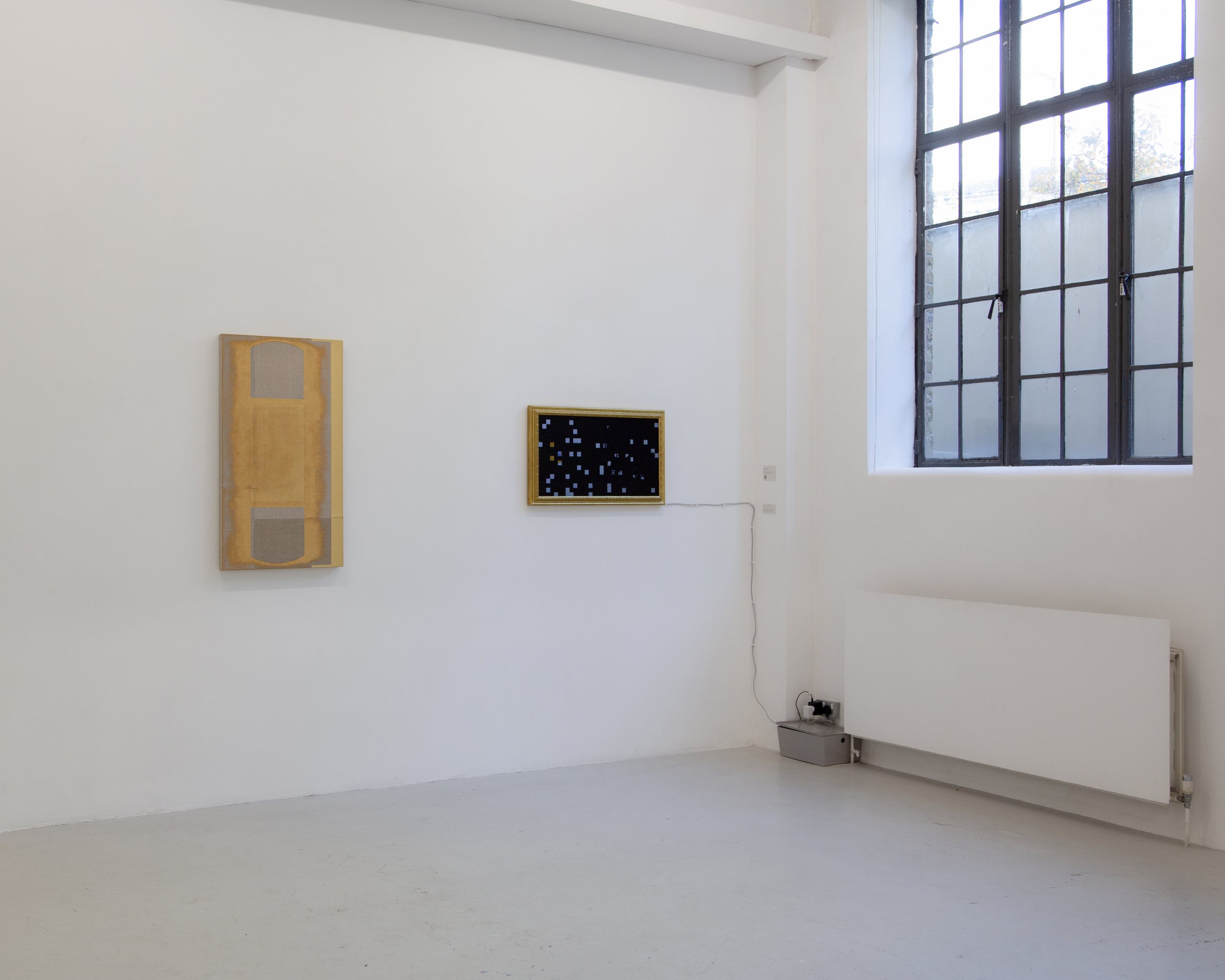
Playing Time on the partition wall, with Mizuki Tanahara’s No Title (Yet), a screen of scattered pale tiles in a gilt frame, to its right; beyond, a steel-framed window above a radiator.
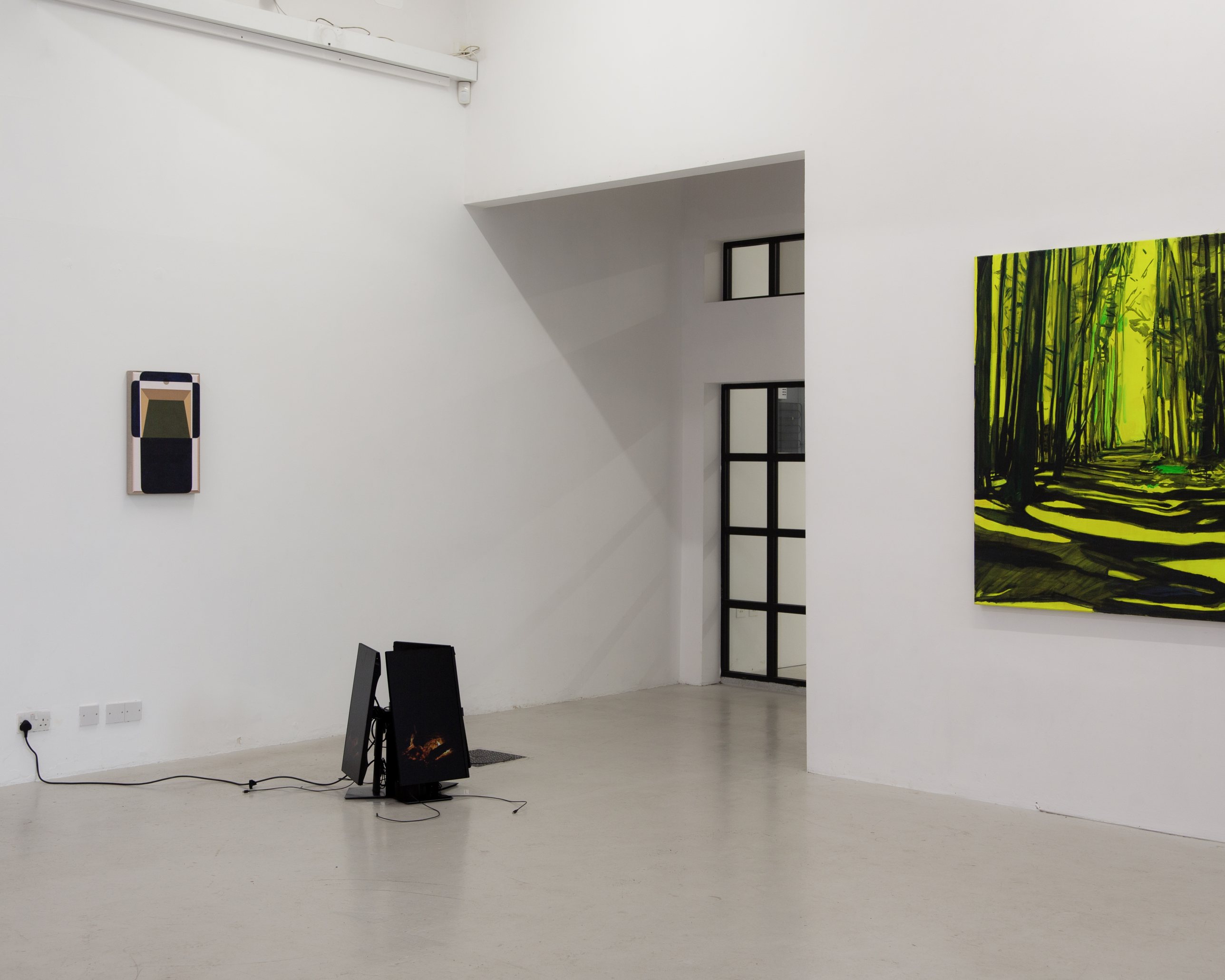
Interval on the wall at left, with Mizuki Tanahara’s Taki-B, two screens showing a fire, on the floor in front; at right, Ania Tomaszewska-Nelson’s The Last Future, a painting of a yellow-green forest; between them, an opening to a passage with a glazed door.
Looking along the long wall: Addison, Closedown and Mizuki Tanahara’s The Panopticon of Data; on the far wall, Mirage above a radiator; at right, the legs of the wooden tower that housed Ania Tomaszewska-Nelson’s The Creature. Strip lights run along the beams of the white ceiling.
Ania Tomaszewska-Nelson’s wooden hunter’s tower, which housed her film The Creature, in the middle of the gallery; behind it, part of Addison, and on the long wall Closedown and Mizuki Tanahara’s The Panopticon of Data.
The steel-framed glass double doors, straight on: Mizuki Tanahara’s Big Brother, a framed photograph at left and two small framed paintings of a 0 and a 1 above the doors; Interval at right.
Interval seen at an angle beside the glass doors, with the two small paintings of Big Brother above them; further along the wall, Big Brother’s photograph and Mirage, and Mizuki Tanahara’s The Panopticon of Data on the long wall beyond.
Mirage on the wall above a radiator set into it; further along, Big Brother’s photograph, the glass doors with its two small paintings above them, and Interval; at the end of the gallery, Taki-B on the floor before a passage with a glazed door.